
The Political Economy of Palestine
Introducing a Collaboration between the Palestine Economic Policy Research Institute (MAS) and Dollars & Sense
Introducing a Collaboration between the Palestine Economic Policy Research Institute (MAS) and Dollars & Sense

On October 7, 2023, members of Hamas and other Palestinian militant groups launched an attack against Israel from Gaza, killing 828 civilians, including 36 children and 71 foreign nationals, as well as 367 Israeli military personnel. About 250 people were kidnapped and taken back to Gaza, at least 45 of whom later died. Sixteen years earlier, Hamas, after winning democratic elections, had taken over political control of Gaza, with Israel responding by imposing a crippling land, air, and naval blockade over the area. Between 2007 and 2022, the Israeli military also attacked Gaza multiple times, killing over 5,000 Palestinians and causing an estimated $5 billion in damage.
Following the 2023 attack, as this article went to press, at least 75,000 Palestinians, and just over 2,000 Israelis had been killed—a shocking ratio of 37.5 Palestinians for every Israeli death. At least 90% of the population became displaced, and Gaza’s infrastructure was devastated, making it difficult to envision what a functional economy might look like. Meanwhile, in the West Bank, where in theory Palestinians exercise limited self-government in parts of the territory, the situation can be described more as a slow choking off and loss of hope on the part of Palestinians. Israel continues to limit Palestinian mobility and finances, both of which have affected Palestinian economic activity and well-being, while settlers run amok across the region. In the coming months, Dollars & Sense will publish a series of articles by the Palestine Economic Policy Research Institute (MAS), examining the Palestinian economy. This article provides a historical overview of this tragic conflict and introduces the economic issues explored in the series.
In the 19th century, Palestine was well integrated into the global economy, providing top-quality barley to breweries in Scotland, wheat to pasta manufacturers in Italy, cotton and sesame to France, olive oil and olive-oil soap to Yemen and Egypt, and, of course, the famous Jaffa oranges, which were shipped to England in large quantities. During the late 1800s, barley was Palestine’s most important export crop, with sesame vying with oranges as the second most important commodity. Around the turn of the 20th century, olive oil and soap rose in importance, generating revenues similar to those of oranges.
At that time, a small indigenous Jewish community lived side by side with Muslim and Christian Palestinians. In 1877, 3% of the population in historic Palestine was Jewish, numbering fewer than 14,000 people. But by 1896, in the context of rising antisemitism in Europe, ongoing European colonial expansion, and the growth of modern nationalism, Theodor Herzl, a Hungarian journalist and lawyer frequently identified as the “father of modern political Zionism,” called for the “restoration of the Jewish State.” Subsequently historic Palestine and present-day Kenya, among other locations, were proposed as possible locations where this could occur.
In 1922, the League of Nations formally approved a British Mandate over Palestine, which took effect in 1923 following the collapse of Ottoman rule. Jewish immigration from Europe increased, and Jews made up a growing share of Palestine’s population, reaching 15% by 1925. Both the indigenous inhabitants and the Jewish immigrants objected to British rule. Palestinians also objected to Jewish immigration. As the Holocaust devastated Jewish populations in Europe, protest and violence also wracked historic Palestine, with the Arab Revolt of 1936–1939 and the rise of a Jewish Resistance Movement occurring in the 1930s and 1940s as well.
By the end of 1946, after nearly three decades of British rule, Jews made up approximately one-third of Palestine’s population and owned less than 7% of the land. In the wake of World War II and the Holocaust, the United Nations proposed partitioning historic Palestine into separate Jewish and Arab states, allocating 55% of the territory to the proposed Jewish state, and just 45% to the proposed Palestinian state.
Palestinians rejected this arbitrary and imbalanced plan, not least because they had long opposed Zionist immigration and settlement under British rule. The partition plan was adopted in November 1947 over Arab objections, with fighting between Jewish and Palestinian Arab forces soon escalating into war. Zionist paramilitary groups and, later, Israeli forces expelled or drove hundreds of thousands of Palestinians from their homes.
Although the U.N. partition plan offered Palestinians 45% of their ancestral home, by 1948, when Israel emerged victorious after what Israelis regard as the country’s war of independence and Palestinians call the Nakba (the disaster), Israel was in control of 77% of the land. Jordan took control of the West Bank, including East Jerusalem, while Egypt administered the Gaza Strip. As a result of the war, over 700,000 Palestinians became refugees, fleeing from what became Israel, mostly to the Gaza Strip, West Bank, Jordan, Lebanon, and Syria.
Initially, the Red Cross and the American Friends Service Committee (AFSC), a Quaker organization, were among the groups that stepped in to provide shelter and food to the refugees who had lost their homes and their livelihoods. In 1949, the United Nations Relief and Works Agency for Palestine Refugees in the Near East (UNRWA) was formed. Palestinians are the only refugee population with their own dedicated U.N. entity, suggesting tacit recognition by the colonial powers of the catastrophe that the creation of Israel imposed on the indigenous population.
In 1964, a loose affiliation of resistance groups formed what became known as the Palestine Liberation Organization (PLO), with Yasser Arafat, who represented Fatah (an economically centrist group) leading the PLO starting in 1969. Other members of the PLO included the Popular Front for the Liberation of Palestine (PFLP, established in 1967), and the Democratic Front for the Liberation of Palestine (DFLP, established in 1969 after a split with the PFLP), both of which were to the left of Fatah.
In 1967, Israel took control of the remainder of historic Palestine, occupying East Jerusalem, the West Bank, and the Gaza Strip (as well as occupying Egypt’s Sinai Peninsula and Syria’s Golan Heights), after what became known as the Six Day War. Because Israel had a considerably higher gross domestic product (GDP) per capita, Palestinians almost immediately began serving as a cheap labor force for Israeli industries. By 1975, about one-third of Palestinians were working inside Israel, with this trend continuing until the Oslo Accords, a series of agreements beginning in 1993 that established a framework for Palestinian self-government. Soon after the 1967 war, Israel also began building Jewish settlements in the West Bank and Gaza Strip. The U.N. Security Council (UNSC) condemned Israel’s settlement activity as early as 1968 (UNSC Resolution 252) with the United States and Canada abstaining, but between 1967 and 1987, the number of settlers increased to over 67,000.
As settlement activity continued unabated and Israeli political repression tightened, a largely nonviolent uprising swept across the West Bank and Gaza Strip in 1987. Known as the “Intifada” (Arabic for “shaking off”), this movement was led by a loose coalition of grassroots organizations and involved a variety of strategies, including mass demonstrations, an economic boycott, and a series of general strikes. The Intifada (now known as “The First Intifada”) ended in 1993 with the signing of the Oslo Accords.
Importantly, the First Intifada also marked the mainstreaming of political Islam within Palestinian politics. Whereas the PLO was largely secular and nationalist in its approach, the political party known as Hamas, which emerged during the First Intifada, situated its political rhetoric within the framework of Islam. This group was initially supported by the Israeli government as a strategy for weakening the PLO. Aside from a small group on the left (including the PFLP and parts of the DFLP), Hamas and the more radical group Islamic Jihad (founded in 1981 in Gaza) were the only Palestinian political groups to reject the Oslo Accords.
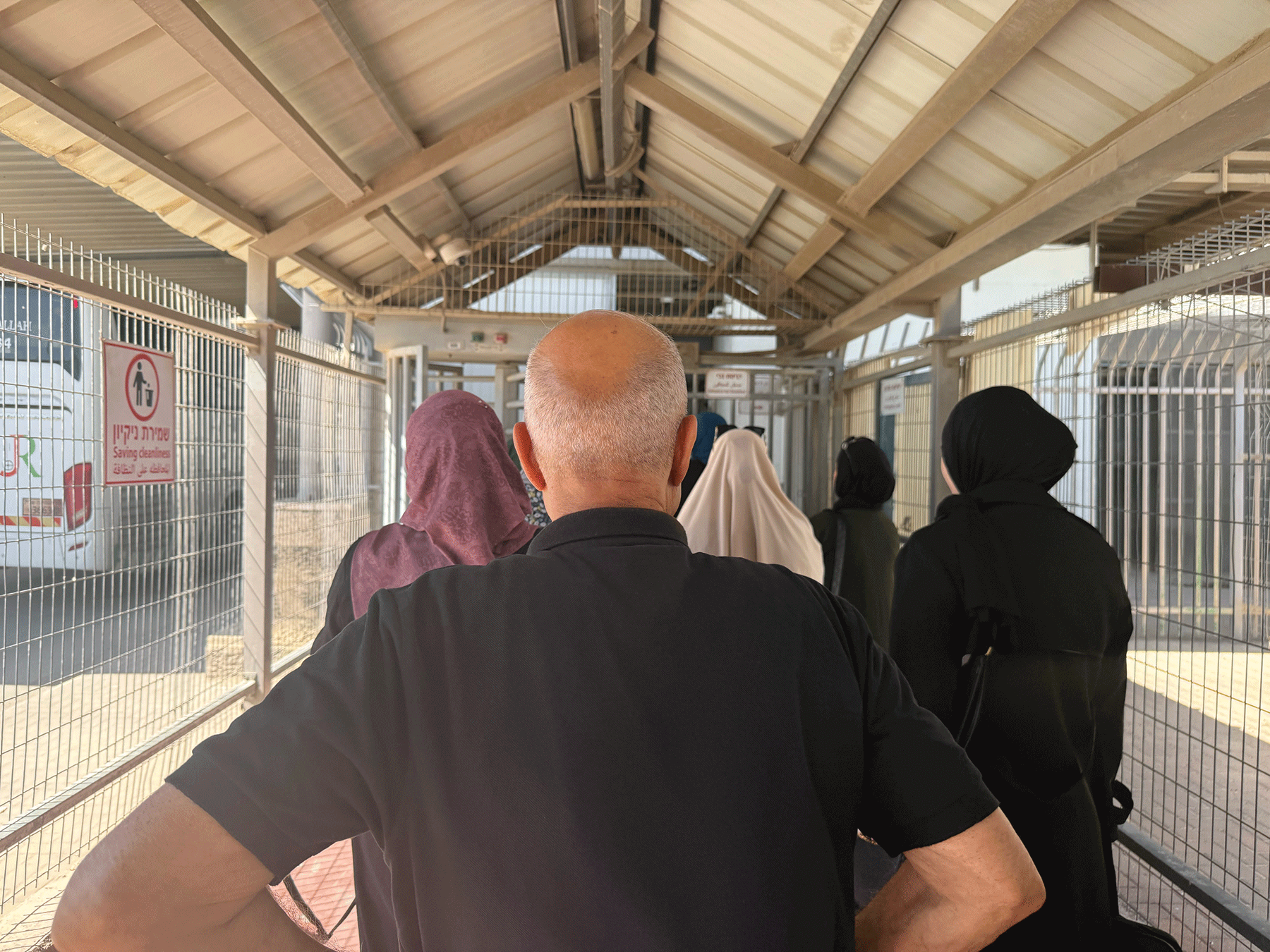
The signing of the Oslo Accords in 1993 brought about major historical changes for the Palestinian economy. This turning point was followed by the formation of a quasi-governmental entity known as the Palestinian Authority, and Arafat was elected as the first president in 1996. Among the Palestinian institutions established during this period was the Palestinian Central Bureau of Statistics (PCBS), which made far more economic data available. In terms of governance, the West Bank was carved into three segments: Area A (18% of the territory), under the control of the Palestinian Authority; Area B (22%), under joint control; and Area C (the remaining 60%), under full Israeli control.
The economic components of the Oslo Accords were laid out in the Protocol on Economic Relations (commonly known as the Paris Protocol), which was signed by both sides in 1994. The vast power imbalance between the two parties was not acknowledged in the language of that agreement, contributing to Israel’s continued dominance and control in subsequent years. For example, the agreement stated that “There will be free movement of industrial goods free of any restrictions including customs and import taxes between the two sides,” the caveat was added that this would be “subject to each side's legislation.” This caveat gave Israel room to control trade as it saw fit. As a result, Israel regularly restricts the flow of Palestinian goods into Israel, but the Palestinian Authority, given that it controls no borders, has no ability to respond by blocking Israeli goods. Notably, Palestinians are heavily dependent on trade with Israel, with the most recent published figures indicating that approximately 60% of Palestinian imports come from Israel, and close to 90% of Palestinian exports are destined for Israel.
After the Oslo Accords, the World Bank pushed to “unleash” the potential of the Palestinian private sector. Yet Israeli policies have repeatedly and systematically undermined these plans, which emphasized private-sector growth in keeping with a neoliberal approach to development. As an example, investment in greenhouses in Gaza to grow strawberries was expected to generate foreign exchange from Europe. But the hopes that emerged from Oslo were soon dashed, as Israel continued to control all external borders (for both goods and labor mobility) and introduced new internal controls in the form of checkpoints and roadblocks, which quickly led to the cantonization of the West Bank, fragmenting it into isolated enclaves and limiting movement between Palestinian communities. At the same time, Gaza became increasingly cut off from the rest of the world, with the strawberries, among other time-sensitive crops, often rotting on the docks because Israel blocked their export. Meanwhile, settlements continued to expand, relying on the confiscation of Palestinian land and water resources and the construction of parallel infrastructure, including separate, considerably better roads for settlers than for Palestinians.
In 2005, estimates suggest that around 440,000 settlers were living in the West Bank and East Jerusalem. Interestingly, in that year Israel forcibly withdrew the approximately 9,000 Jewish settlers who had been living in Gaza and ended the direct Israeli military presence in Gaza, in a change of strategy under the Sharon government. Because Israel continued to control all borders and increasingly used drones to monitor Palestinians in Gaza, they still maintained considerable power over the population.
Palestinian elections were held in 2005 (presidential) and 2006 (parliamentary) with Mahmoud Abbas of Fatah winning the former, but Hamas winning the majority of seats (74 of 132, while Fatah won 45) in the latter. Hamas’ electoral success was attributed to multiple factors, most notably their opposition to what many saw as the failed Oslo Accords. In 2007, violent clashes broke out between Hamas and Fatah, with Hamas maintaining control of Gaza and Abbas maintaining control of the West Bank and dissolving the Hamas-controlled parliament.
Israel in turn imposed a crippling siege and naval blockade on Gaza in 2007 and also further reduced employment opportunities for Gazans within Israel. By September 2023, while close to 20% of Palestinians in the West Bank were working either in Israel or in settlements, only 2% of Gazans were. On the eve of the October 7, 2023, attack, the PCBS estimated that unemployment in the Gaza Strip stood at a shockingly high 45%, compared with a much lower, though still considerable, rate of 13% in the West Bank. Attempts to bolster Palestinian infrastructure by the EU and other providers of foreign aid have also been seriously undermined by Israeli policies, with the Euro-Med Human Rights Monitor estimating that between 2001 and 2016, €65 million in EU projects having been destroyed, with about one-third of that damage occurring during 2014 when Israel launched an extensive military attack against Gaza.
Following Hamas’ and other armed groups’ attack on October 7, 2023, Israel launched its latest massive military campaign, which continues to this day. To date, over 3% of Gaza’s population has been killed. Additionally, the vast majority of Gazans have been displaced, and the area has been subjected to a devastating siege. In September 2025, the Integrated Food Security Phase Classification (IPC) categorized 30% of Gazans as being in Phase 5, the most severe category of food insecurity, with another 60% being in Phase 4 (Emergency). According to official counts, almost 500 people have died due to malnutrition since October 2023, but the impacts of this entirely man-made famine go beyond counting deaths. Malnutrition is devastating not only in the short run, but also in terms of long-term development, since extended periods of food insecurity cause physical stunting, brain damage, and other health complications. As such, the development prospects for Gaza are being compromised not only due to the massive destruction of infrastructure, which has led to challenges both in terms of access to health care, education, and markets, but also due to extensive periods of caloric deficits, which are having devastating and long-lasting negative impacts on Palestinians’ health and long-term mental functioning.
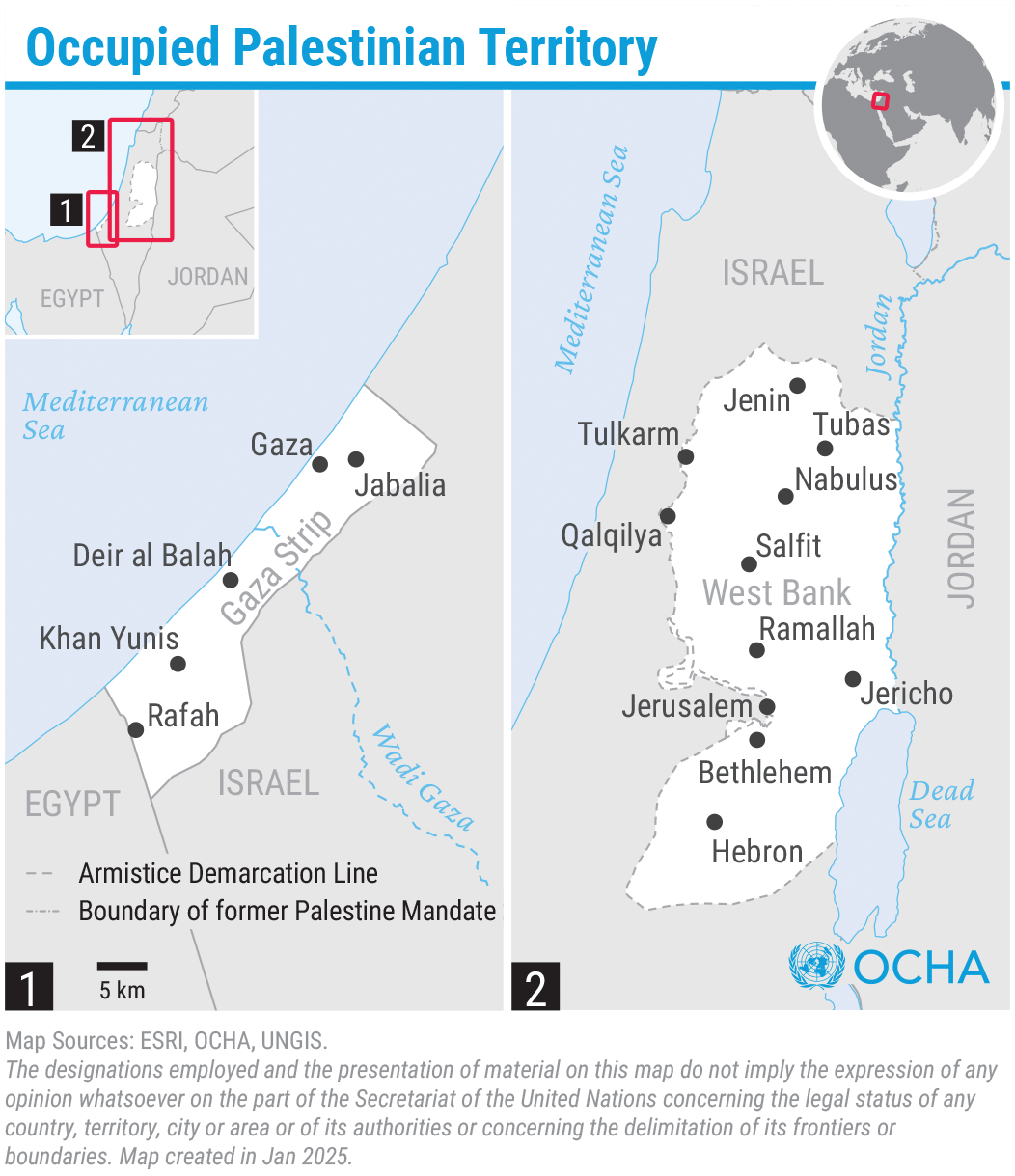
The Economic Situation in the West Bank. Given the extremely dire situation in Gaza, it is difficult to turn to the West Bank, where the economic situation is less acute but enormous challenges also persist. Certain areas of the West Bank are being severely affected by settlement activity. Settlers regularly destroy Palestinian property with impunity, and Palestinians receive neither justice nor compensation. Amnesty International has characterized the attacks on some West Bank Palestinian communities as a form of ethnic cleansing.
Since October 2023, unemployment in the West Bank has risen from 13% to over 30%. Meanwhile, because of the Palestinian Authority’s financial difficulties, public-sector workers have not been paid their full wages. As a result, the West Bank economy, while not facing the acute collapse seen in Gaza, has remained in crisis for nearly three years.
A major factor behind the Palestinian Authority’s fiscal crisis has been Israel’s withholding of clearance revenues. Since 2019, Israel has withheld increasing amounts of these funds; by 2026, the total reportedly reached 14 billion shekels ($4.8 billion). The resulting shortfall has contributed to an inability to pay government salaries and other expenses in full, increasing financial hardship for public-sector workers and their families and reducing service provision. Reduced household spending has also affected businesses, creating wider economic repercussions. U.N. Trade and Development (UNCTAD) estimates that per capita income fell by 33% in 2023 and 28% in 2024, but these aggregate numbers hide the stark differences between the economies of the West Bank and the Gaza Strip, with the latter having experienced a shocking 83% decline in per capita GDP in 2024.
Resisting Occupation Through Nonviolent Means. While much attention has focused on the violent attack on Israel in October 2023, it is important to point out that, over the years, Palestinian society has mostly responded to the ongoing colonial violence imposed on it through nonviolent forms of resistance. One early example of collective economic resistance was the general strike and boycott campaign which took place during the Arab Revolt of 1936–1939, in response to both British rule and Zionist immigration and settlement. The strategy of boycott was again employed by Palestinians in the West Bank and Gaza Strip during the First Intifada. Fast forward to 2005, when Palestinian civil society organizations launched the movement now known as Boycott, Divestment, and Sanctions (BDS). The movement has faced legal restrictions in the United States, as documented by the film “Boycott,” which points out that attempts to make boycotting Israel illegal are a violation of free speech. More generally, the long history of nonviolent efforts to challenge the historic and ongoing brutality of colonialism is a testament to the ingenuity of Palestinian resistance.
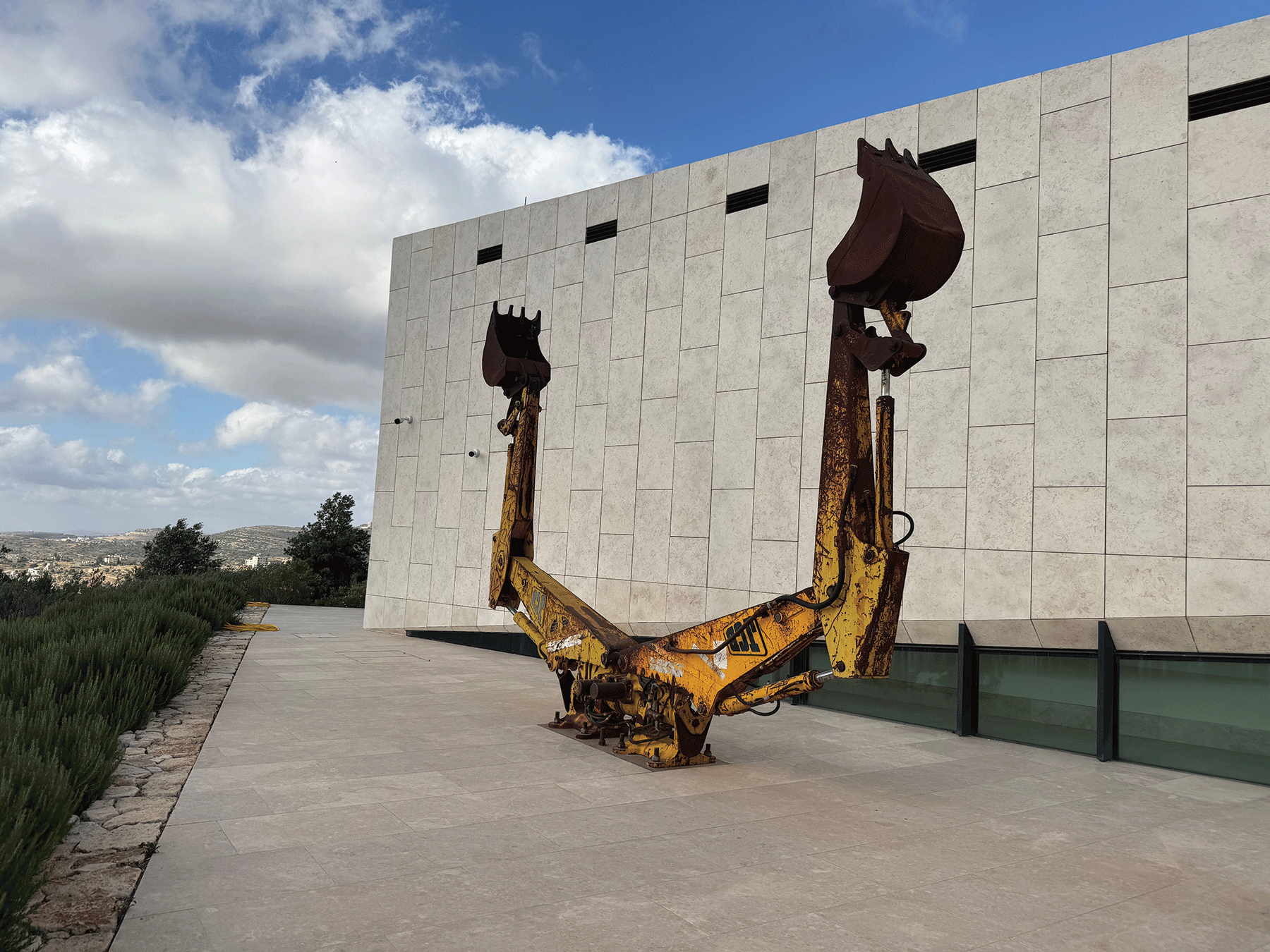
This introduction has outlined the many structural factors contributing to the suppression of the Palestinian economy. The massive loss of property and livelihoods in 1948 was the first significant blow to Palestinian economic well-being, and it was linked to the displacement that resulted from the creation of Israel. The 1967 occupation of the West Bank and the Gaza Strip marked a second important turning point and the beginning of a series of evolving dependencies for Palestinians living under military occupation. Initially, Palestinians became dependent on better-paid work in Israel. Following the signing of the Oslo Accords, however, the Palestinian economy became more isolated and fragmented, with Gaza in particular becoming increasingly cut off from the world. While significant foreign aid has flowed into the West Bank and Gaza Strip since 1993, the initial hope that accompanied the Oslo Accords has given way to despair, as aid has increasingly been used not for economic development but to address the growing humanitarian crisis resulting from continued Israeli control.
Subsequent articles in the series will explore several topics in greater depth:
The “settler economy.” Palestinians have become integrated into settlement economies, both as a cheap, highly exploitable labor force for Israeli settler industries and as workers building the houses that Israeli settlers then inhabit. How does settlement expansion shape Palestinian economic and social decisions on health, education, investment, and production?
The Palestinian public sector. The public sector plays a distinct role in the political economy of Palestine, but how does fiscal and economic policy function without monetary or border sovereignty? Why has there been an alarming increase in both public and private Palestinian debt in recent years?
Labor market fragmentation. What links unemployment, informal work, and wage differentials to labor mobility restrictions and the Israeli permit system? How does dependency shape power, productivity, precarity, and developmental prospects?
Food insecurity and poverty. How do the public finance and labor market realities of Palestine shape the particular effects of poverty there? What are the intergenerational effects of food insecurity and what are the implications for long-run development?
Migration and brain drain. What factors have led to the outmigration of skilled Palestinian workers and how has this brain drain affected the Palestinians who remain?
Environmental impact. How have occupation the settlement project, and militarism led to environmental degradation? How has this affected productivity and long-term growth?
Taken together, these topics illustrate why Palestine’s economy cannot be understood in isolation from the political and military conditions under which it operates. A political economy approach makes it possible to examine how control over land, labor, resources, and public finances shapes economic opportunities and constraints—and how these structures affect Palestinians’ livelihoods and prospects for development.
Jennifer C. Olmsted is a professor of economics, director of Middle East Studies, and co-director of the Social Impact program at Drew University. Growing up in Beirut, Lebanon, and living in the Occupied West Bank have shaped her research interests.
Further Reading: Marwan R. Buheiry, “The Agricultural Exports of Southern Palestine, 1885-1914,” Journal of Palestine Studies, Summer 1981 (jstor.org); Leila Farsakh, Palestinian Labor Migration to Israel: Labor, Land and Occupation (Routledge, 2005); Toufic Haddad, Palestine Ltd.: Neoliberalism and Nationalism in the Occupied Territory (I.B. Tauris, 2016); Amira Hass, “Israel Withholds Billions in Palestinian Authority Funds, Pushing West Bank to Brink,” Haaretz, May 6, 2026 (haaretz.com); Justin McCarthy, The Population of Palestine: Population History and Statistics of the Late Ottoman Period and the Mandate (Columbia University Press, 2020); Jennifer Olmsted, “The Physical and Economic Devastation of Gaza,” Dollars & Sense, June 2009; Alaa Tartir, Tariq Dana, and Timothy Seidel, editors, Political Economy of Palestine: Critical, Interdisciplinary, and Decolonial Perspectives (Palgrave Macmillan, 2021); The Economics of Peace and Security Journal, Vol. 3, No. 2, Symposium on the Palestinian Economy, 2008 (epsjournal.org.uk); Review of Radical Political Economics, Vol. 57, Issue 2, Symposium on Political Economy of Occupation, Colonialism, and Conflict in Palestine, June 2025 (urpe.org); Ben White, Palestinians in Israel: Segregation, Discrimination and Democracy (Pluto Press, 2012).